
The Stovetop Espresso Revolution: Why Americans Are Trading Tech for Tradition
Here’s a question that would have seemed absurd just five years ago: Why is a 93-year-old Italian coffee maker suddenly the darling of TikTok? The answer tells us something important about how we’re rethinking our relationship with coffee—and with convenience itself.
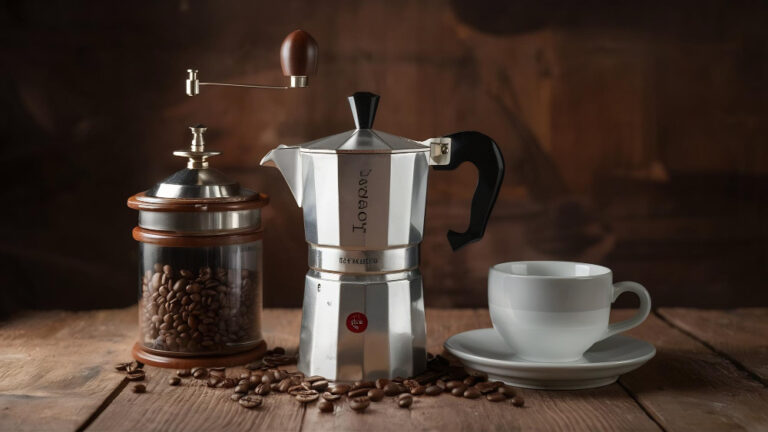
The Bialetti Moka Express, that charming octagonal aluminum pot your grandmother might have owned, is experiencing an unexpected renaissance. After decades of being relegated to flea markets and vintage shops, this humble brewer has become a symbol of the “slow coffee” movement—a pushback against expensive espresso machines, single-use pods, and the industrialization of our morning ritual. And the numbers back it up: the Moka Express costs between $30 and $50, compared to $1,000+ for a quality espresso machine.
But this isn’t just about nostalgia or price. Americans are discovering what Italians have known since 1933: when you understand how to use it properly, the Moka Express makes genuinely exceptional coffee.
The Design That Changed Everything
Let’s start with history. Alfonso Bialetti didn’t just invent a coffee maker in 1933—he created an icon that has sold over 200 million units worldwide. The octagonal shape wasn’t random; it was pure Art Deco design, inspired by the futurism of early 20th-century Italian aesthetics. The genius? A simple principle: steam pressure forces hot water through ground coffee, extracting flavor without requiring electricity or complicated mechanics.
For American consumers exhausted by appliances that require software updates, the Moka Express feels radical in its simplicity. There’s no digital display, no pods, no maintenance beyond rinsing with water.

Buy the Bialetti moka express pot on Amazon
How It Actually Works—And Why Americans Get It Wrong
The Moka Express operates on what’s called the percolation process. Water heats in the bottom chamber until it creates steam pressure, forcing it through a basket of ground coffee and into the upper chamber. It’s low-tech, elegant, and devastatingly easy to mess up if you don’t understand the mechanics.
Here’s where most Americans stumble: they treat it like an espresso machine. It’s not. The Moka Express never reaches the 9 bars of pressure that a true espresso machine delivers. This means success depends entirely on three variables: water quality, grind size, and heat management.
The Three Critical Variables
Water Quality: Use filtered water. Seriously. The mineral content in tap water directly affects extraction. Most coffee experts recommend filling the bottom chamber to just below the safety valve.
Grind Size: This is crucial—and most Americans get it wrong by using espresso-fine grounds. Instead, aim for a medium-fine grind, similar to what you’d use for an AeroPress. Think of it as between drip coffee and espresso. If your grounds are too fine, you’ll get a sputtering, over-extracted mess. Too coarse, and the coffee tastes weak and watery.
Heat Management: Use a medium heat, slightly lower than the base of the pot. The coffee should start appearing in the upper chamber around 5-7 minutes for a 3-cup model. This isn’t fast; it’s deliberate.
Brewing Protocol for Perfect Moka Coffee
Here’s the American-friendly method that specialty coffee experts now recommend:
What You Need:
- One Moka Express (any size from 1-cup to 12-cup)
- A burr grinder
- A small kitchen scale (this matters more than you’d think)
- Filtered water
- Medium heat source (gas or electric—not induction unless you buy an induction plate adapter)
- A timer
- A cup of ice water or access to running cold water
The Steps:
- Pre-heat your water by boiling it separately. This cuts brewing time and provides more consistent results—a trick that specialty coffee experts now recommend.
- Fill the bottom chamber with hot filtered water to just below the safety valve (usually around 160 ml for a 3-cup model).
- Insert the filter basket and fill it with approximately 15 grams of medium-fine grounds. The key: level it gently by tapping the base, but don’t press or tamp. You’re not making espresso.
- Screw the top chamber securely onto the bottom chamber.
- Place on medium heat and start your timer. The heat should be noticeably lower than the base diameter of the pot—this isn’t a sizzling affair.
- Keep the lid open. Yes, this matters. Watching the coffee fill the upper chamber tells you exactly when to stop extraction and prevents that final steam burst that causes over-extraction and bitterness.
- Remove at the 5-7 minute mark as soon as you hear a hissing sound—that’s the safety valve warning you extraction is complete.
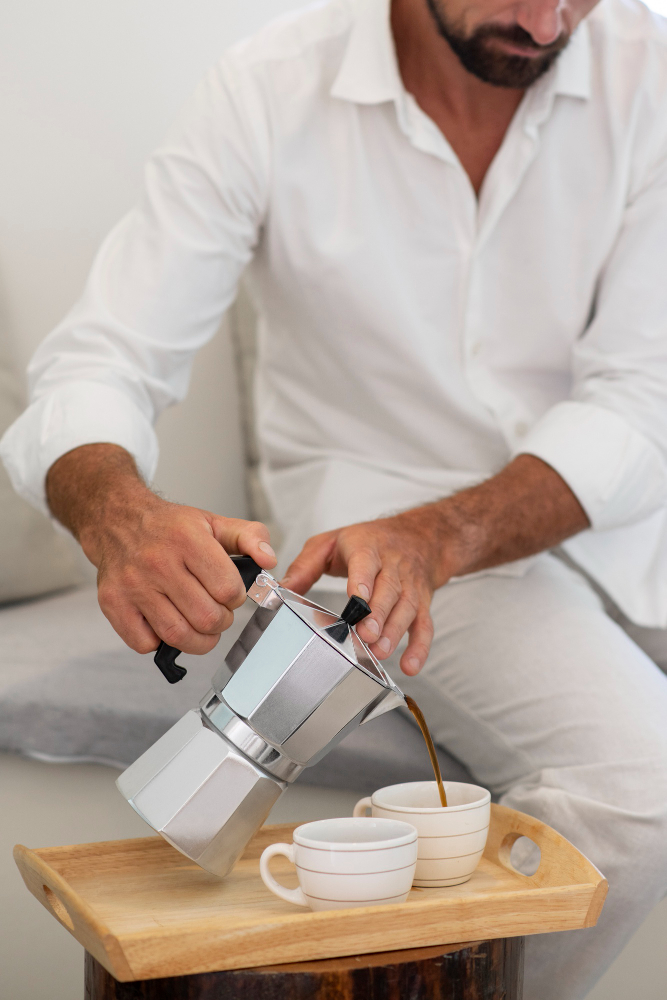
- Cool it immediately by running cold water over the bottom chamber (just the underside, not the top). This stops the extraction and prevents that burnt, over-stewed taste that gives Moka pots a bad reputation.
- Serve immediately. This isn’t coffee that improves with sitting.
The Comeback: Why 2026 Is Different
What makes this moment different from past nostalgia cycles? Several factors converge:
Sustainability. The Moka Express produces zero waste. No pods, no filters to replace every month, no electricity. It’s a piece of durable equipment that can last 20+ years with basic care.
Affordability. At $35-50, entry into specialty coffee doesn’t require a $2,000 investment. For apartment dwellers in New York, Los Angeles, or Chicago who can’t justify a full espresso machine, the Moka Express is revelatory.
Social Media Effect. TikTok has turned coffee-making into performance art. The aesthetic of a Moka Express on a stovetop—the steam rising, the theatrical timing—translates perfectly to short-form video. Millennials and Gen Z are discovering their parents’ coffee pots and realizing they’re cooler than they thought.
Premium Designs. Luxury brands like Alessi and Dolce & Gabbana have created designer Moka pots, elevating what was once purely utilitarian into collectible objects.
Common Mistakes That Ruin the Experience
Before you run out to buy one, know the pitfalls:
- Using espresso-grind coffee. This creates too much resistance, and your brew will splutter unevenly.
- Using too much heat. A medium setting is genuinely medium. High heat causes the steam to rush through before water extracts enough flavor.
- Not using fresh beans. Bialetti recommends coffee ground just before brewing. Stale grounds oxidize and taste flat.
- Skipping the cooling step. Leaving the Moka pot on heat even 30 seconds too long shifts the flavor from smooth and chocolatey to burnt and bitter.
- Filling the basket wrong. Don’t tamp or press the grounds like espresso. Level them gently.
The Taste Question: Is It Really Good?
Here’s what independent reviewers found when they tested multiple Moka pots: the Bialetti Moka Express produces a smooth, full-bodied flavor profile—chocolatey, smoky, with mild acidity. It’s not true espresso (lower pressure means lower intensity), but it’s richer than standard drip coffee and more flavorful than most French presses when brewed correctly.
The coffee has slightly less caffeine than espresso shots but more than a typical cup of pour-over—roughly 60-80mg per serving for a 3-cup model. It’s the Goldilocks option: strong enough for coffee purists, smooth enough for those who want it in milk-based drinks.
Practical Advice for Americans Starting Out
If you’re considering joining the Moka Express movement, here’s what to do:
Start with a 3-cup model ($35-45). It’s the sweet spot for learning without wasting coffee. Once you understand the rhythm, you can collect different sizes for different occasions.
Invest in a scale. A basic kitchen scale costs $15 and removes the guesswork. 15 grams of coffee becomes precise rather than intuitive.
Get a burr grinder if you don’t have one. A hand grinder works perfectly—no electricity required, which fits the whole aesthetic anyway. Brands like Comandante or 1Zpresso cost $50-80 and produce excellent consistency.
Use specialty coffee. Standard grocery-store coffee won’t showcase what the Moka Express does well. A bag from a local roaster or online subscription service (usually $12-16 per bag) makes a noticeable difference.
Keep the seal fresh. The rubber gasket wears out after 2-3 years of regular use. Replacement seals cost $5. This is a feature, not a bug—it’s designed to be maintained and repaired, not discarded.
The Bottom Line
The Bialetti Moka Express isn’t a technology; it’s a philosophy. It says: I prefer slowness to convenience. I value ritual over automation. I’d rather understand how my coffee works than outsource it to a machine. In 2026, that philosophy resonates differently than it did in 2010.
For Americans tired of subscription services, algorithms, and devices that expire, the Moka Express offers something increasingly rare: a tool that improves with experience and demands nothing from you but attention and care. It costs less than a week of specialty coffee shop visits, produces coffee that rivals what those shops sell, and asks only that you remember: sometimes the best engineering is the kind that hasn’t changed in 90 years.