
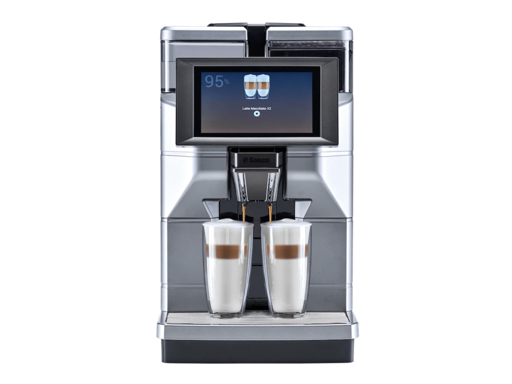
What if your espresso machine already knew exactly how you like your coffee before you pressed a single button? In 2026, that’s no longer a marketing tagline — it’s the new technical standard.
The home coffee machine market is undergoing its most significant transformation in two decades. AI integration, real-time shot logging, pressure profiling at the consumer level, and on-demand cold brew in under 30 minutes have all moved from professional café equipment to domestic appliances available on mainstream retail shelves. The question is no longer whether technology can improve your morning cup — it’s which technology to choose.
AI-Driven Brewing: From Smart to Self-Learning
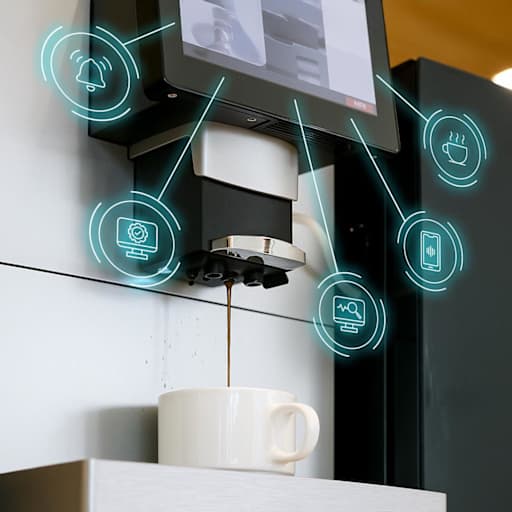
The defining innovation of 2026 is not a single feature — it is a fundamental shift in how machines learn and adapt. AI-powered coffee machines now analyze bean characteristics in real time, automatically adjusting grind size, water temperature, brew time, and extraction pressure based on the specific coffee loaded into the hopper. Each parameter is no longer a static preset but a dynamic response to what’s actually in the machine.
The most illustrative example is the GE Profile Smart Grind & Brew, which integrates Google Cloud’s SmartHQ AI Coffee Assistant — a conversational AI that responds to user feedback, creates custom brewing profiles, delivers real-time extraction guidance, and evolves its recommendations over time through machine learning. This “voice-to-cup” experience marks a genuine generational leap. Machines at SIGEP World 2026 — the industry’s benchmark trade show held in January — showcased how shot logging now records temperature, flow rate, and yield in real time, so users can identify exactly what changed on the day a shot tasted different.
Precision Grinding: The 2026 Burr Standard
You cannot have an exceptional espresso without an exceptional grind — and 2026’s flat burr grinders deliver particle uniformity that was unimaginable at home just three years ago. The best models this year achieve 92–96% uniform particles, a 2–3% improvement over 2025 generation burrs, with grinding speeds running 10–15% faster thanks to improved motor and burr geometry.
The top-ranked models for home espresso in 2026 include the Zpresso K-Ultra, Fellow Ode Brew Grinder Gen 2, and Breville Smart Grinder Pro — each featuring digital grind displays, programmable dosing, and stepless adjustment for precise dial-in. The Zpresso K-Ultra in particular earns consistent top marks from independent testers for its combination of hand-grind precision and retention reduction technology. On the flat burr side, the DF64 Gen 2 has become the benchmark for single-dose espresso grinding, with a design that actively minimises static and retention.
Pressure Profiling Goes Mainstream
For years, pressure profiling — the ability to vary brew pressure throughout a shot’s extraction — was reserved for €3,000+ professional machines. In 2026, it has crossed into the consumer segment as a standard, accessible feature.
The shift is structural: manufacturers who used to bolt connectivity onto existing hardware are now designing firmware and hardware together from the ground up. The result is programmable pressure profiles saved and recalled by name, remote preheating via smartphone, and genuine flow control that lets home baristas replicate café-level extraction variables. For flavour, the implications are real: a shot started at low pressure to pre-infuse, then ramped to peak, then tapered off at the end extracts sweetness and reduces bitterness in ways that fixed-pressure machines simply cannot achieve.
Cold Brew On-Demand: No More Overnight Waiting
One of the most consumer-visible innovations of 2025–2026 is accelerated cold brew technology in home machines. Traditional cold brew requires 12+ hours of steep time. New systems using agitation, vacuum cycles, and pressure-assisted infusion now deliver genuine cold brew results in 15 to 30 minutes, directly from the machine.
This technology — first seen in the De’Longhi Eletta Explore’s Cold Extraction System — has now expanded to multiple brands and price points, reflecting strong market demand for cold coffee beverages at home. It represents a convergence of the cold coffee culture that has driven café sales with the convenience expectation of home brewing.
Key Features to Look For in 2026
Not every “smart” machine lives up to its label. Before investing, verify these criteria:
Native AI integration (hardware + software designed together, not Bluetooth-patched onto an existing model)
Shot logging and extraction data accessible via app — temperature, flow, yield, and timing per shot
Programmable pressure profiles with named save/recall function
Ceramic flat burr grinder with 12+ grind levels and digital dose display
IoT and voice assistant compatibility (Google Home, Alexa) for hands-free scheduling
On-demand cold brew capability for iced drinks without overnight prep
The 2026 Market at a Glance
What’s Coming Next: The 2030 Horizon
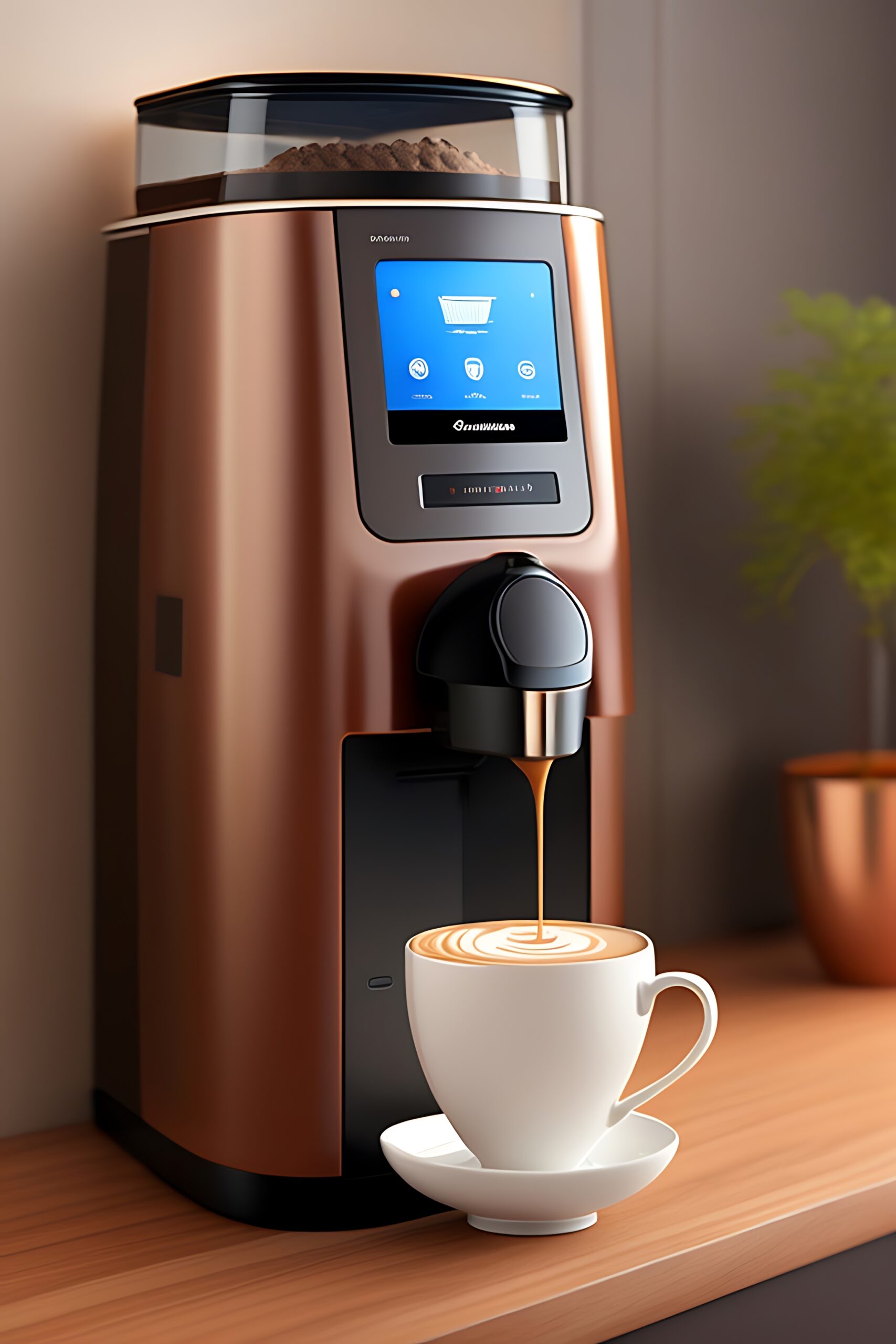
The trajectory is clear. By 2030, coffee machines will be predictive rather than reactive — ordering their own descaling cartridges, scheduling their own maintenance based on usage patterns, and suggesting new beans based on your flavour history. Espresso trends for 2026 and beyond also point toward smaller milk drinks, greater emphasis on bean traceability at the machine level, and the emergence of “tech-hidden” machines — high-tech internals wrapped in deliberately minimal, design-first exteriors that blend into premium kitchen aesthetics.
The global coffee machine market is on track toward $25 billion by 2036, with the smart connected segment leading growth. For the home coffee enthusiast in 2026, the message is straightforward: your kitchen can now compete seriously with any café on the corner — and in some dimensions, surpass it.